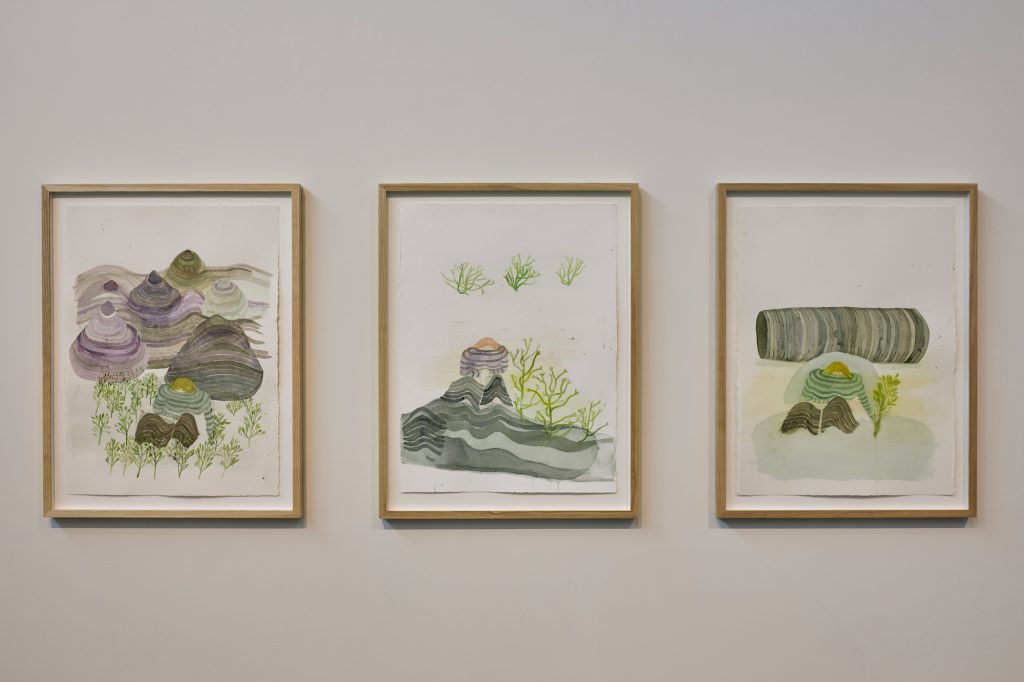
Set within the context of global anxiety about the climate crisis and planetary health research, Salt Road was commissioned to be part of this major group exhibition and associated relational events, workshops and installations at New Art Gallery Walsall (NAGW) in 2025. The exhibition presents existing and newly commissioned artworks by artists and community makers that highlight our connection with the earth and our potential to return to a more healthy and harmonious existence with the natural world. It emerges from the argument that, over time, natural and human histories have become so disconnected that we have lost sight of the innate interconnectivity between human and natural life. Dr Sally Payen was one of the NAGW exhibition artists. Sally Payen’s newly commissioned paintings in the exhibition ‘Earthbound’ are inspired by Suzanne Simard, a leading forest ecologist and author of ‘Finding the Mother Tree’, a book that helped to change human perceptions of trees and the ways in which they communicate with each other and other living things.
Simard can be seen to represent many women scientists who bear witness, research, and report on issues around climate change. She is also personally respectful of ancestral knowledge, an area of interest shared with Payen.
Salt Road organised the Nature and Climate Youth Fair at New Art Gallery Walsall: Thursday May 22nd 2025 , as part of the Earthbound exhibition, as well as running 5 relational workshops with the artists Jaime Jackson and Stephen Whitehead. Who worked with young people to co-produce an audio visual installation in the Long Gallery at NAGW.
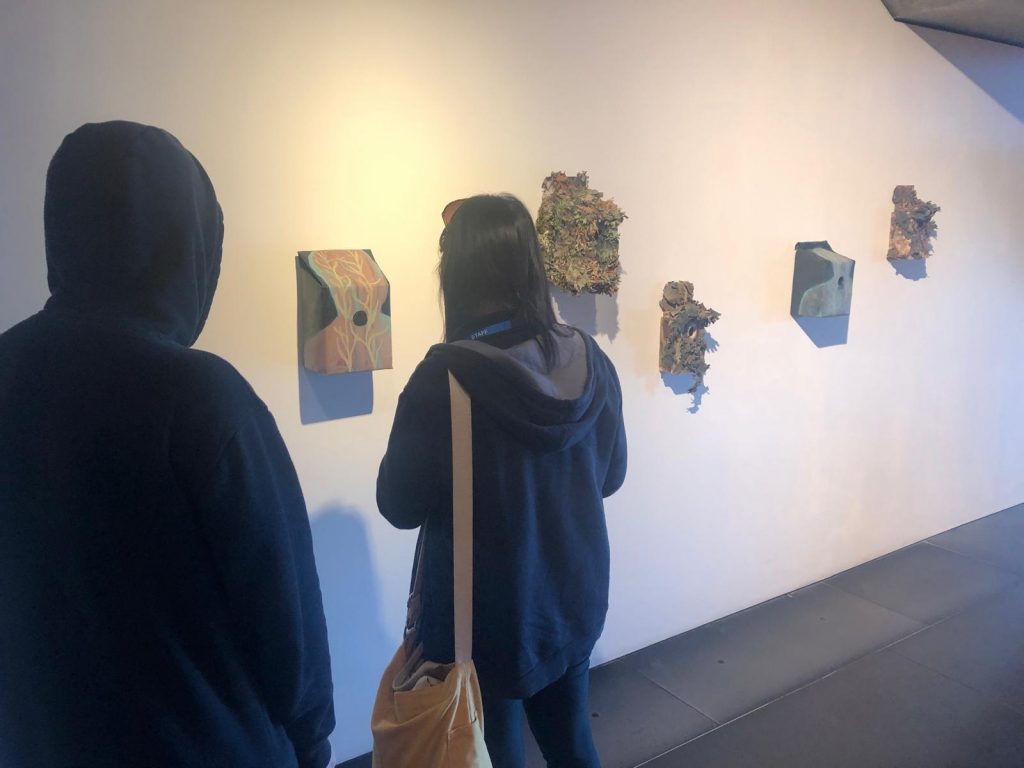
Set within the context of global anxiety about the climate crisis, the Earthbound exhibition at New Art Gallery Walsall presents existing and newly commissioned artworks that highlight our connection with the earth and our potential to return to a more healthy and harmonious existence with the natural world. It emerges from the argument that, over time, natural and human histories have become so disconnected that we have lost sight of the innate interconnectivity between human and natural life.
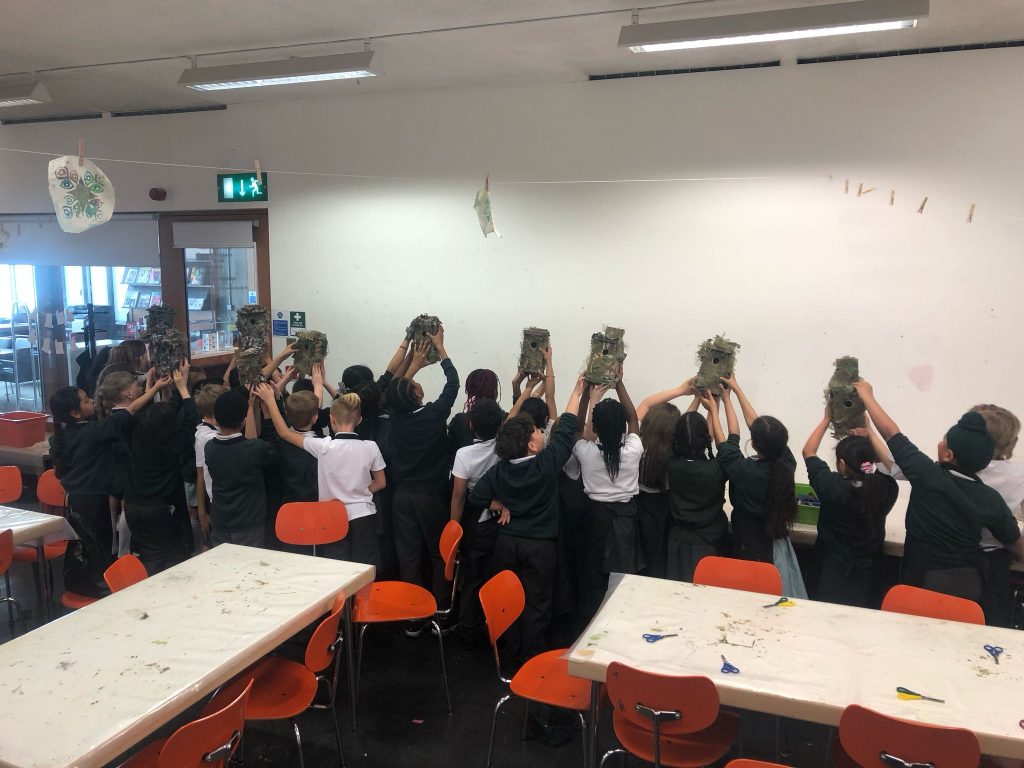
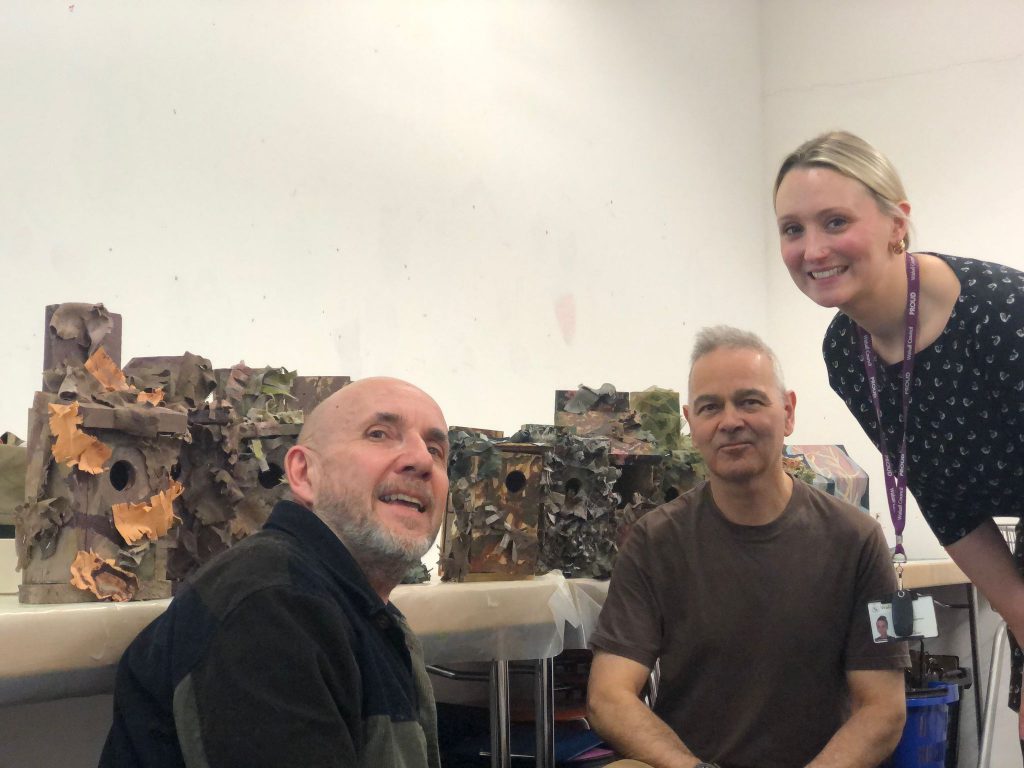
Our nature and culture youth summit at New Art Gallery West Midlands will support and enable young people by sharing their creative explorations and perspectives on what biodiversity and the earth crisis means to them. The day will Include pop up performances, exhibitions, demonstrations and talks led by young people and supported by Climate Psychology Alliance, Culture declares Emergency, Salt Road and Handsworth Association of Schools. Including young people from Walsall College, The Ladder School and Handsworth Wood Girls Academy.
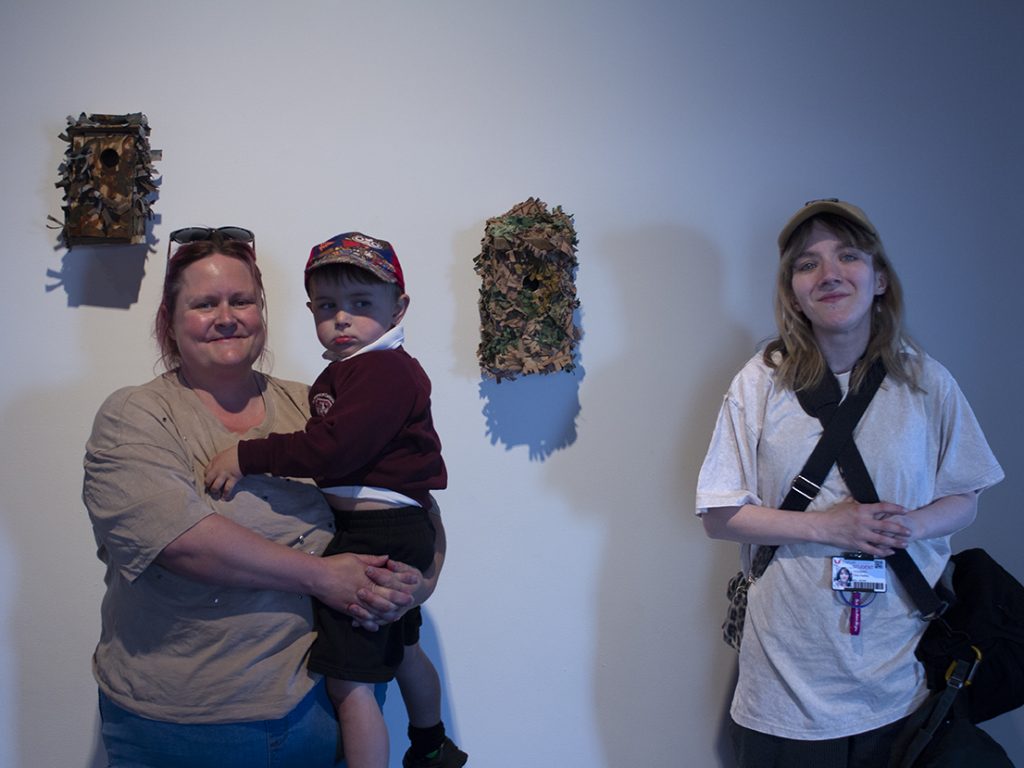
Through sculpture, drawing, painting, installation and natural art-making techniques, the artists address earthbound themes that connect us with soil, plants, seeds, mycelium, animals and birds, and the histories, cultures and knowledge surrounding these.
The effects of global warming and climate change are deeply troubling.
Rising temperatures alter the delicate balance of my forest home, affecting the availability of prey and the timing of crucial events such as the nesting season.
Warmer climates can also introduce new predators and diseases, making survival increasingly challenging.
Additionally, the loss of old growth forests due to climate change driven wild forests and deforestation diminishes my habitat, leaving fewer safe places to rest and raise my young.
The destruction of these natural cycles threatens not only my existence, but also the intricate web of life that depends on a stable environment
For us and our spiritual life from our perch in the spiky remaining trees, it feels like the balance of our world is teetering.
We birds adore our leaf paradise.
But the effects of global warming threatens our food sources and home.
Humans, with their massive factories and endless cars seem to create such heat and pollution.
We’ve noticed the seasons getting strange, the trees disappearing in odd times and sometimes not growing as they should.
Humans, it seems, are often driven by things we birds don’t quite grasp, like money and power.
But there’s hope too, as we see humans planting trees, creating protective reserves and advocating for clean earth.
If humans could all join forces to care for the environment, perhaps the forest would remain a sanctuary not just for us, but for the countless other creatures as well.
How do you cut down my trees?
How can you be a human?
Why do you cut down our trees?
For resources like homes, tables and other things that we need to survive.
Don’t think about us, ours and the other birds living there.
I’m Mr. Tree.
It’s not just you as a person, but as a collective.
We need to realize how much impact your actions have on this earth and to all of us.
You need to be more cautious and self aware of what you’re doing.
You need to pay more attention.
And I know it may seem easy or may seem like you’re not making much of an impact because you’re just one person.
But when people keep adding and become a collective, it starts creating this lasting impact.
Now we’re reaching the point where we won’t be able to come back from it.
And its sad and it’s not good for us and it’s not good for you.
Not good for anything.
You won’t be able to continue on.
I won’t be able to help you and you won’t be able to help me.
If we keep destroying each other.
I’m a red admiral butterfly and a message that I’d like to send that needs to be thinking more about combination of levels for insects and beings to re pollinate to help the world as it’s full of toxins and to help bring nature back.
And to help see all the beautiful butterflies like myself littering around in the sunshine and the wind.
This was spoken on behalf of Maaza, my cat.
The Amur leopard is in danger and ranked one of the most endangered animals in 2024.
Over the years, the Amur leopard hasn’t just been hunted mercilessly.
Its homeland has been gradually destroyed by unsustainable forest fires, road building, farming and industrial development.
We need to protect the Amur leopard by stopping the hunting.
Then we should stop the selling of the parts, for example, its skin or its head.
As an Arctic fox, climate change affects me by having to move to different climates to find the one which suits me best.
Global warming is a good example of us Arctic animals losing water produce and losing the temperature which suits us best.
Not to mention how we can get consumed by our predators.
When we reach an unbearable climate, we would have to commute further than we already have.
Pollution is another factor of harm as it puts us Arctic animals into danger because of malformations in our reproductive organs.
Deforestation is a list for us Arctic animals by fragmenting habitats and displacing wildlife.
One thing I think that we should stop mainly is deforestation due to the lack of home space we have, which makes us go to other dangerous places, which can definitely lead to extinction.
And written on behalf of the Arctic fox.
As a monarch butterfly, I’ve always followed the natural flow of the seasons.
But climate change is disrupting that consistency in ways I can no longer ignore.
The flowers I rely on for nectar aren’t blooming on time, some of them disappearing altogether, leaving me and my offspring with fewer resources.
The milkweed I lay my eggs on is vanishing, making it harder for the next generation to survive.
Unpredictable storms and strong winds put me off course, while droughts and wildfires destroy the landscapes I once depended on.
Even my winter sanctuary in Mexico is at risk as deforestation and warming temperatures weaken the forests that have sheltered me for generations.
I am a traveller, a symbol of change.
But if humans don’t act soon, my species may be lost forever.
Considered together, the works in Earthbound embody notions of care, community and courage, conveying a sense of hope and looking towards a future where, through a collective and deeper engagement with the planet, we can still effect positive change on our environment at both local and global levels.